 BodyWision
High blood pressure often causes no clear symptoms for a long time. Whether blood pressure is abnormal therefore cannot be reliably determined by how someone feels. Correctly performed measurements and medical interpretation of several readings are what matter. But what do numbers such as 120 over 80 actually mean? What do the upper and lower values represent? And what should you keep in mind when measuring your blood pressure at home?
What is blood pressure?
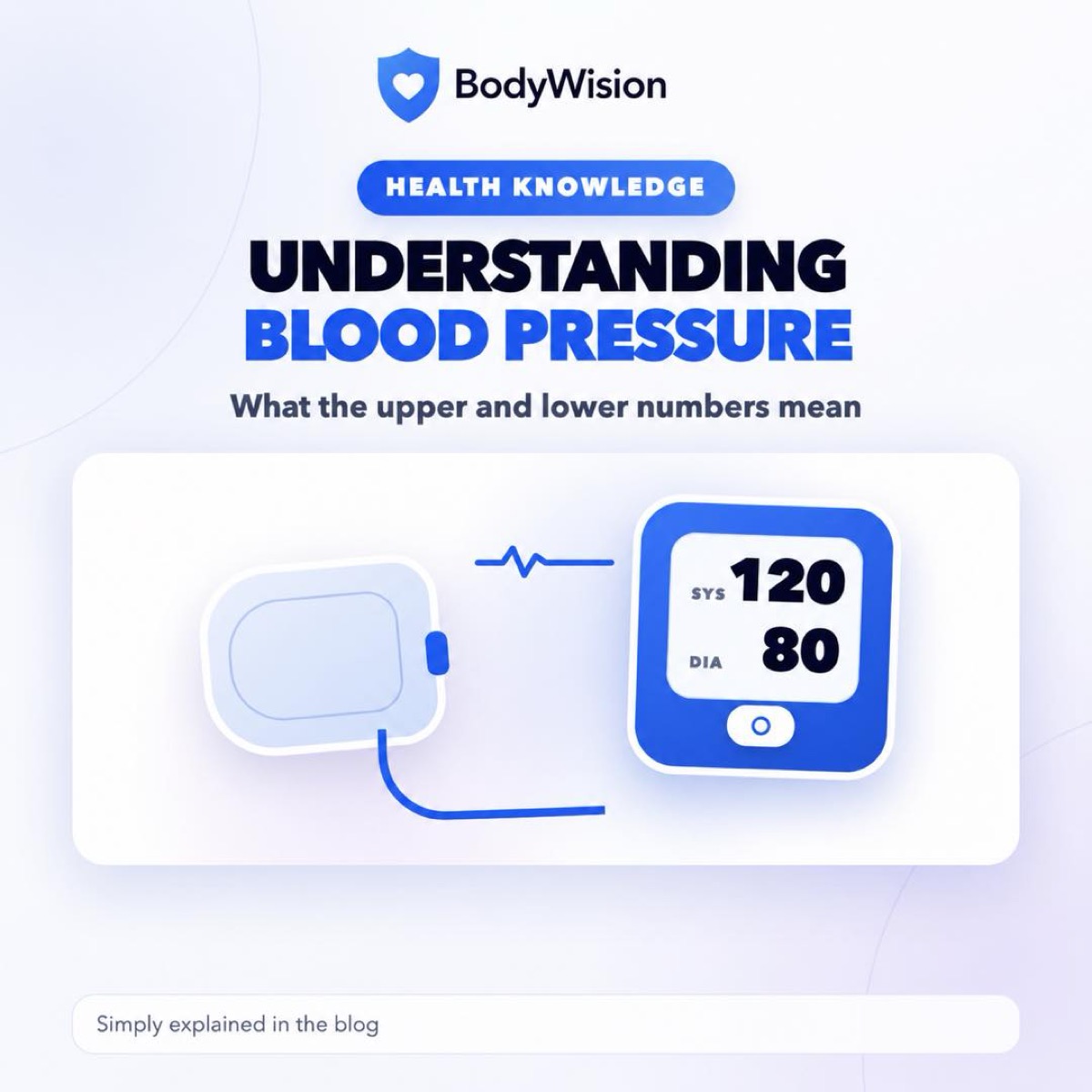
With every heartbeat, blood is pumped through the blood vessels. This creates pressure against the vessel walls—blood pressure. This pressure does not remain the same throughout the day. It can change because of physical activity, rest, stress, pain or certain stimulants. Such fluctuations are initially normal. What matters medically is whether blood pressure remains elevated over time. Blood pressure is measured in millimetres of mercury, abbreviated as mmHg. A blood pressure reading always consists of two numbers, for example: 120/80 mmHg The first number is the systolic blood pressure and the second is the diastolic blood pressure.
What does the systolic value mean?
The systolic value is the first, or upper, number in a blood pressure reading. It shows the pressure in the blood vessels during the phase in which the heart muscle contracts and pumps blood into the circulation. In a reading of 120/80 mmHg, 120 is the systolic value.
What does the diastolic value mean?
The diastolic value is the second, or lower, number. It describes the pressure in the blood vessels while the heart relaxes between beats and fills with blood again. In a reading of 120/80 mmHg, 80 is the diastolic value. Both values are important for medical assessment. The frequently cited example of 120/80 mmHg is not a universal personal target, however. The values recommended for an individual can depend on factors such as age, existing conditions and personal cardiovascular risk.
Why does high blood pressure often go unnoticed?
Many people with elevated blood pressure do not initially feel ill. Symptoms such as headaches or dizziness can occur, but they are not specific and cannot reliably identify or exclude high blood pressure. The WHO estimates that around 1.4 billion adults aged 30 to 79 worldwide were living with hypertension in 2024. About 44 per cent of those affected were unaware of it.
When is blood pressure considered elevated?
The Austrian Public Health Portal and the WHO generally define hypertension as repeated readings of at least 140/90 mmHg. A single reading of 140/90 mmHg or above does not automatically mean that a person has hypertension. A diagnosis normally considers several measurements and the individual's health context. The measurement setting also matters. Readings taken in a medical practice, at home and during 24-hour ambulatory monitoring may be assessed differently. Current European guidelines also distinguish between elevated blood pressure and hypertension and take overall cardiovascular risk into account.
Why can a single reading be misleading?
Blood pressure can change within a short period. A higher reading can be influenced by factors such as:
White-coat hypertension can also play a role: some people have elevated readings in a medical setting while their readings at home are lower. Conversely, readings in a medical practice can appear normal even though they are elevated outside the practice. Depending on the situation, repeated measurements in a medical practice, documented home readings or 24-hour ambulatory monitoring may therefore be needed.
- physical exertion shortly before the measurement,
- stress, nervousness or excitement,
- pain,
- caffeine or nicotine,
- talking during the measurement,
- an unsuitable cuff size,
- an incorrect sitting position,
- an arm that is not supported at heart level.
How to measure blood pressure correctly at home
Anyone measuring their own blood pressure should aim to create comparable conditions. Small details can influence the result.
Before the measurement
Sit quietly for a few minutes first. If you document your readings over several days, try to measure at similar times and under comparable conditions. If you have an existing condition or abnormal readings, discuss the appropriate measurement frequency with a healthcare professional.
During the measurement
Keep the following points in mind. For reliable results, use a clinically validated device, as not every commercially available monitor is equally accurate.
- Sit upright with your back supported.
- Place both feet flat and next to each other on the floor.
- Do not cross your legs.
- Rest your arm comfortably on a surface.
- The cuff or measuring device should be at heart level.
- Place an upper-arm cuff directly on the skin, not over clothing.
- Use a cuff that fits your arm circumference.
- Do not speak during the measurement.
- Remain seated and still until the measurement is complete.
Record your readings
Where possible, record the following for each measurement:
This record can help reveal changes over time and make it easier to discuss the readings clearly during a medical appointment.
- date and time,
- systolic value,
- diastolic value,
- the displayed pulse, if applicable,
- any relevant circumstances such as stress, pain or recent physical activity.
Why does persistently high blood pressure matter?
Persistently high blood pressure can place strain on the blood vessels and various organs. If untreated, it can increase the risk of cardiovascular disease and is associated with conditions including heart attack, stroke, heart failure and kidney damage.
When is medical assessment advisable?
Medical assessment is particularly advisable if:
A healthcare professional can determine whether further measurements or examinations are needed. Personal target values and any treatment must always be determined individually. Do not change, skip or stop prescribed medication on the basis of self-measured readings without medical advice.
- blood pressure readings are repeatedly abnormal,
- the values change significantly compared with previous readings,
- there is uncertainty about the monitor or the measurement method,
- cardiovascular, kidney or metabolic conditions are known,
- abnormal readings occur during pregnancy,
- additional symptoms are present.
When could it be urgent?
Very high blood pressure together with acute severe symptoms can indicate a medical emergency. Possible symptoms include chest pain, shortness of breath, confusion, paralysis, speech problems or severe visual disturbances. If such symptoms occur, do not wait for another measurement or for the readings to improve. In Austria, call the ambulance service on 144 or the European emergency number on 112.
Conclusion: the trend matters
A single value is only a snapshot. Repeated measurements under comparable conditions and personal medical interpretation provide a more meaningful picture. A clear record can help you track changes and have the readings ready for a medical appointment.
Keep blood pressure records organised
With BodyWision, you can keep health documents in one place and prepare changes clearly for medical appointments.
Discover BodyWision